The Shape of a Memory
Some memories never truly leave us.
They fade around the edges, lose their voices and their names, but they remain present in ways that are difficult to explain. They become silent companions, existing somewhere between reality and imagination.
The Shape of a Memory explores that invisible space — where emotions outlive events, and where what we have lost continues to shape who we are.
The story behind the painting
There are people we carry with us long after they are gone.
Not necessarily because they have died, but because they have become part of our inner world. Over time, details disappear. Faces become blurred. Conversations fade into silence. Yet something remains — a presence, a feeling, an unfinished thought.
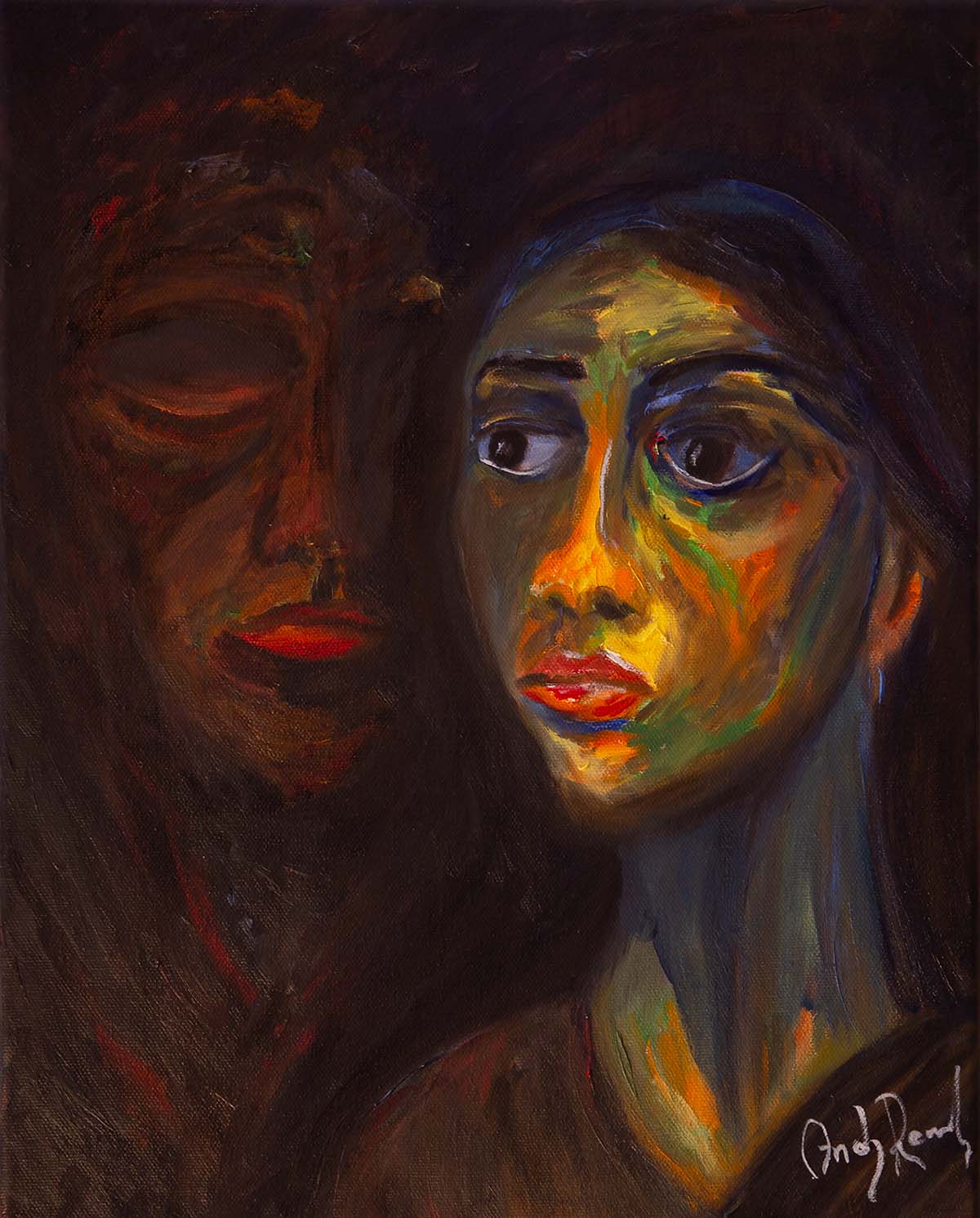
The figure in the background is deliberately undefined. It is not meant to be identified. It could be a lost love, a forgotten friend, a family member, or simply a memory itself. The painting leaves that decision to the viewer.
The woman in the foreground does not look directly at the memory, nor does she try to escape it. She simply exists alongside it. The two figures share the same space, connected by an invisible thread that time has weakened but never broken.
I wanted to capture the strange way memories change over the years. They slowly lose their physical form and become something more abstract — something we can no longer touch, yet somehow still feel.
Perhaps that is what memories ultimately become.
Not stories.
Not photographs.
But shapes.

About the painting
The Shape of a Memory is an expressive figurative oil painting that explores the relationship between memory, absence and emotional presence.
The composition is built around the contrast between two figures. The foreground is illuminated by vivid, almost unnatural colours that suggest life, consciousness and emotional intensity. Behind her, a darker and more fragmented figure gradually dissolves into the surrounding shadows, existing somewhere between appearance and disappearance.
Rather than telling a fixed story, the painting invites personal interpretation. The anonymous figure in the background can represent loss, longing, love, grief, or a part of the viewer’s own past. Its identity remains intentionally unresolved.
The loose brushwork and layered colours create a sense of movement and transformation, reflecting the way memories shift and evolve over time. What once was clear eventually becomes fragmented, leaving behind only an emotional imprint.
This work is part of an ongoing exploration of the unseen aspects of human experience — the quiet spaces between memory and reality, presence and absence, what was and what remains.